Ionic vs. Ceramic: Which Technology Suits Your Hair Type?
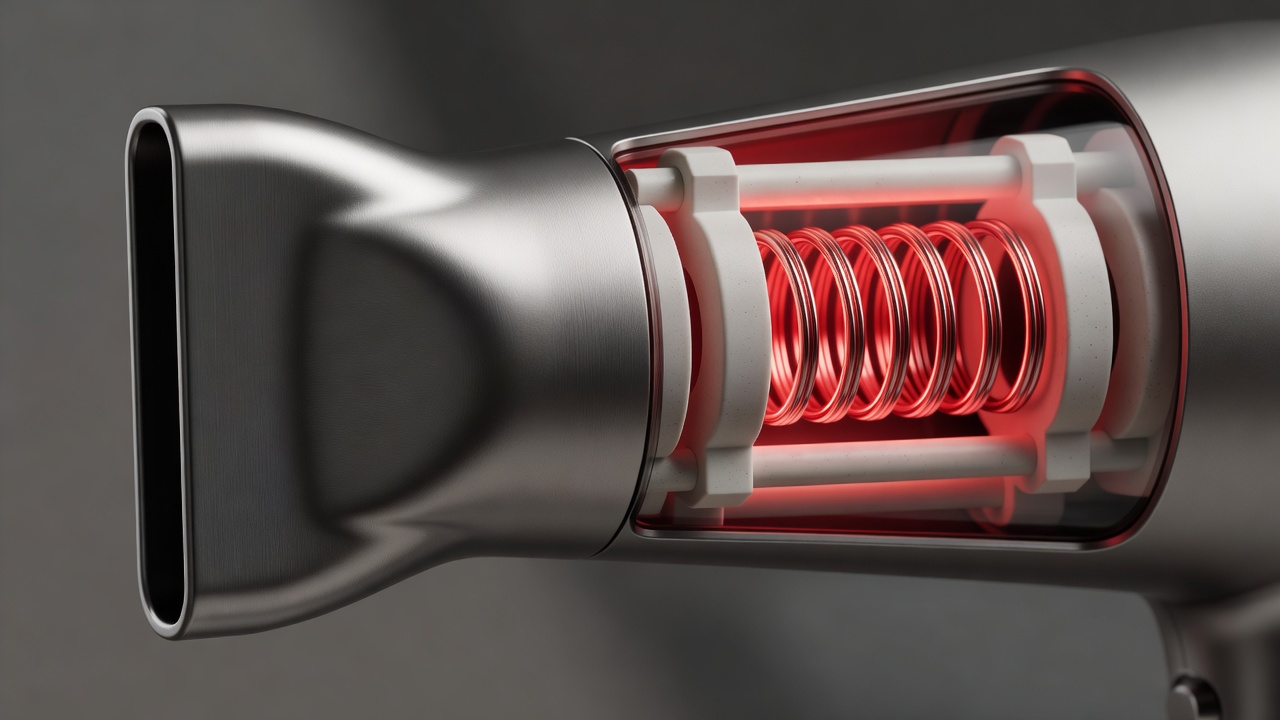
Walking down the haircare aisle or browsing premium styling tools online exposes you to a barrage of technical jargon. Chief among these buzzwords are "ionic," "ceramic," and occasionally "tourmaline." While marketing departments use these terms interchangeably to signify high quality, they refer to distinctly different physical processes that affect how moisture and heat interact with your hair cuticle.
Selecting the right underlying technology is the single most important factor in achieving a salon-quality blowout at home without inducing unnecessary thermal damage. In this guide, we break down the mechanics of ionic and ceramic heating elements to help you align your hardware with your unique hair type.
The Mechanics of Ceramic Technology
At its core, a ceramic hair dryer utilizes interior parts—most notably the heating coils or the internal coating of the barrel—made from or coated in ceramic composite. Ceramic is prized in thermal engineering for its ability to conduct and distribute heat uniformly.
Far-Infrared Heat
When ceramic elements heat up, they emit far-infrared heat. Unlike traditional metal coils that blast the surface of the hair shaft with intense, uneven heat, far-infrared waves penetrate the hair shaft gently, warming it from the inside out. This uniform distribution prevents "hot spots," significantly reducing the risk of accidental burning or localized dehydration of the keratin structure.
The Physics of Ionic Generators
Ionic hair dryers do not rely on a specific type of heating material; rather, they feature an internal electrical component—an ionic generator—that produces millions of negatively charged ions. These ions are expelled alongside the hot air.
Breaking Down Water Molecules
Wet hair is coated in positively charged water molecules. When the negative ions from the dryer hit the positive water molecules, they neutralize the charge, breaking the water down into microscopic droplets. Because these droplets are smaller, they evaporate much faster, drastically reducing the time your hair is exposed to heat. Furthermore, negative ions help seal the outer layer of the hair (the cuticle), which traps in natural moisture and eliminates static electricity, resulting in a sleek, frizz-free finish.
Ionic Pros
- Dramatically reduces drying time.
- Eliminates static and flyaways.
- Produces a highly polished, glossy finish.
Ionic Cons
- Can over-dry fine hair if used too long.
- Reduces natural volume by flattening the cuticle.
Ceramic Pros
- Even heat distribution prevents hot spots.
- Gentle on fine, fragile, or chemically treated hair.
- Maintains natural body and volume.
Ceramic Cons
- Takes slightly longer to dry thick hair than pure ionic models.
- Does not actively neutralize static electricity as efficiently.
Matching Technology to Your Hair Type
Because the technologies serve different primary functions—ceramic manages heat distribution while ionic manages moisture evaporation—identifying your hair's needs is crucial.
Thick, Coarse, or Frizz-Prone Hair
If you have a dense mane that takes an hour to dry, or hair that immediately turns frizzy in humidity, an ionic hair dryer is your best option. The ability to shatter water molecules will cut your drying time in half, while the cuticle-sealing properties of negative ions will give you the smooth, sleek blowout you desire.
Fine, Thin, or Flat Hair
Those with fine hair generally want to maximize volume. Ionic dryers can actually make fine hair look limp and greasy by flattening the cuticle too effectively. Therefore, a ceramic hair dryer is the ideal choice. The gentle infrared heat won't scorch delicate strands, and the lack of negative ions ensures the hair maintains its natural texture and lift at the roots.
A Note on Tourmaline
You may also see "tourmaline" on the box. Tourmaline is a semi-precious gemstone that, when crushed and coated onto internal dryer components, acts as a supercharger for both technologies. It naturally emits massive amounts of negative ions and far-infrared heat. Tourmaline dryers are essentially high-end ionic dryers and are excellent for thick hair, but should be avoided by those with very fine hair seeking volume.
The Final Verdict
While many high-end models now combine both technologies (featuring ceramic heaters and switchable ionic generators), understanding their distinct roles helps demystify the purchasing process. Assess your hair density, your struggle with frizz versus flatness, and your typical drying time to make the smartest investment for your daily routine.