Essential Maintenance to Extend Your Hair Dryer's Lifespan
A high-quality hair dryer is an investment. Whether you spent $50 on a reliable consumer model or $300 on a salon-grade tool, ensuring its longevity requires more than just turning it off when you're done. Just like any mechanical device that relies on air intake, a hair dryer is susceptible to clogging, overheating, and mechanical stress.
Neglecting basic maintenance doesn't just reduce performance—it poses a legitimate fire hazard. Below are the essential care practices every user should implement to keep their tool running safely and efficiently.
The Number One Priority: Cleaning the Lint Filter
Every hair dryer operates by pulling ambient air in through the back, passing it over heated internal coils, and pushing it out through the front nozzle. To prevent hair, dust, and debris from being sucked into the motor, the back vent is covered by a fine mesh screen or filter.
Over time, this filter becomes caked with dust, aerosol hairspray particles, and stray hairs. When the intake is blocked, the motor has to work twice as hard to pull in air. More importantly, the internal coils continue generating intense heat, but without sufficient airflow to push that heat out, the inside of the barrel rapidly overheats. This can melt internal plastic components and trigger the emergency safety thermostat to shut the unit off mid-use.
How to Clean the Filter
- Twist and Remove: On most quality models, the rear cap can be twisted off to expose the metal mesh screen.
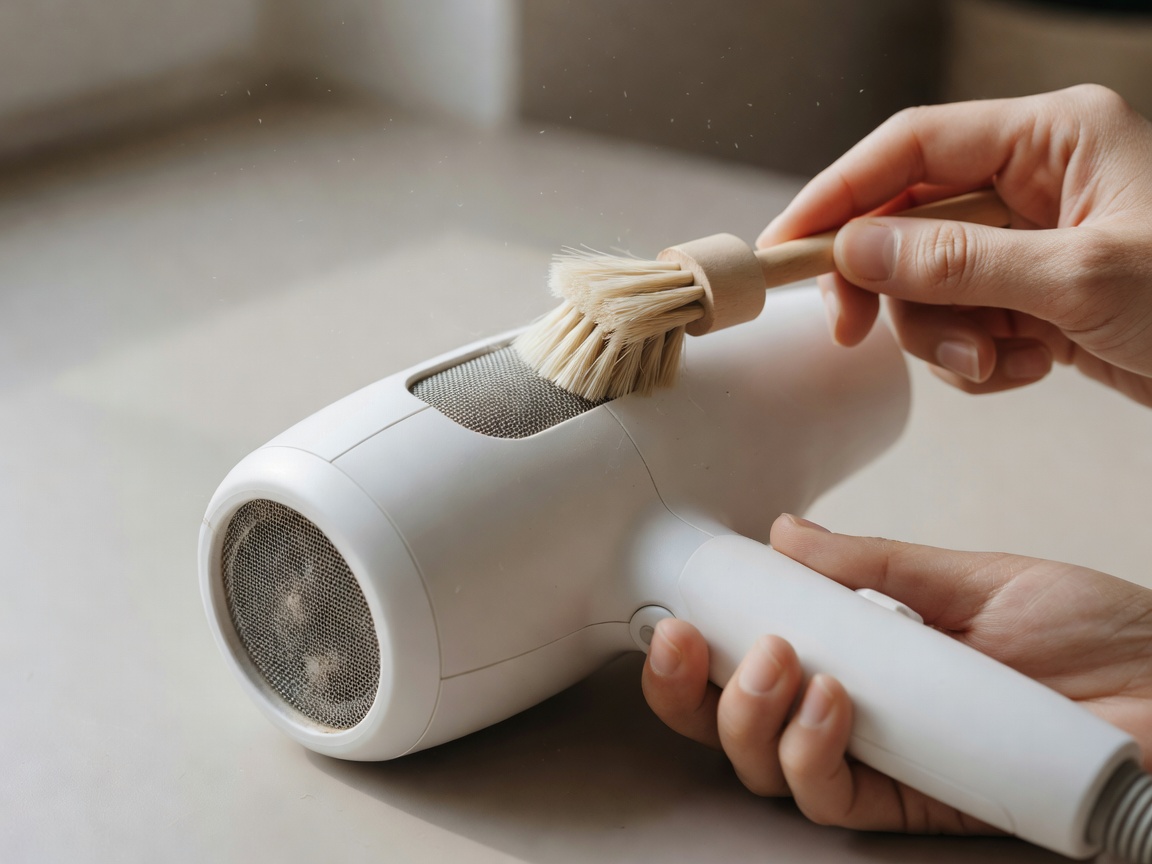
- Brush it Out: Use an old, dry toothbrush to gently scrub the dust off the mesh. Never use water unless the manual explicitly states the filter is washable, as moisture can rust internal parts.
- Wipe Down: Use a microfiber cloth to wipe the plastic exterior of the rear cap before reattaching.
This process should be performed at least once a month, or bi-weekly if you share the dryer with multiple people or live in a dusty environment.
Proper Cord Management
The second most common cause of hair dryer failure is internal wire breakage caused by improper cord storage. Wrapping the cord tightly around the body of the dryer is a habitual mistake many people make. The sharp angle where the cord meets the base of the handle takes immense strain, eventually snapping the copper wires inside the thick rubber casing.
When this happens, the dryer will short out, only turning on when the cord is held at a specific angle. This is highly dangerous and can lead to electrical shocks or sparks.
The Correct Way to Store
Instead of wrapping the cord tightly around the handle, loop the cord loosely into a large circle alongside the dryer, securing it with a velcro strap or a zip tie. Always leave a gentle, relaxed loop at the point where the cord enters the handle housing to relieve tension.
Monitoring Attachment Wear
Concentrator nozzles and diffusers endure extreme heat fluctuations. Over years of use, the plastic can become brittle, leading to cracks or a loose fit. If an attachment is loose, it can rattle and disrupt the aerodynamic flow, or worse, pop off during use and burn you. Periodically inspect your attachments for micro-cracks and replace them if they no longer click firmly into place.
Conclusion
By dedicating five minutes a month to brushing out the lint trap and adopting healthier cord storage habits, you can effectively double the operational lifespan of your hair dryer, ensuring it continues to deliver safe, high-velocity performance day after day.