The Best Diffusers for Enhancing Natural Curls
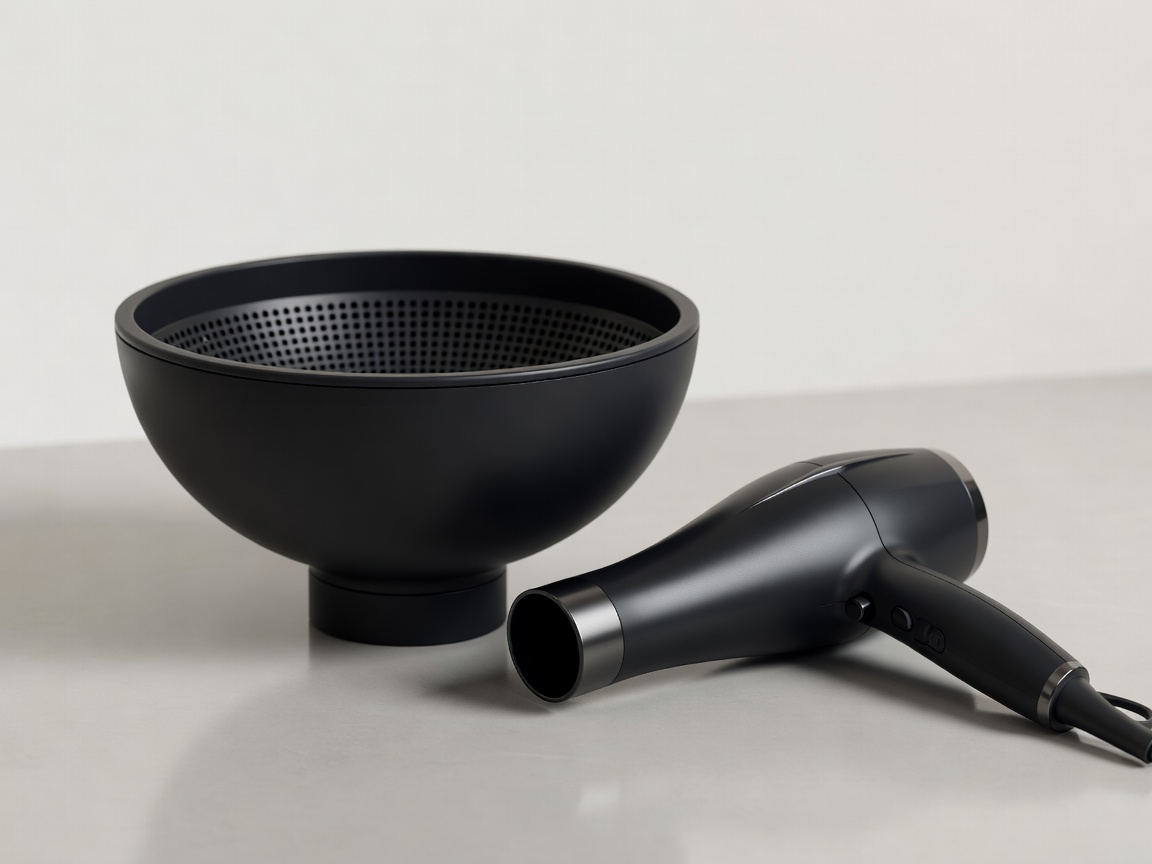
For those with naturally curly, wavy, or coily hair, a standard hair dryer nozzle is the enemy of definition. Concentrated airflow forcefully separates hair clumps, roughs up the cuticle, and turns beautifully defined ringlets into an unstructured cloud of frizz. The solution lies in a humble, bowl-shaped attachment: the diffuser.
But navigating the world of diffusers reveals a surprising amount of engineering complexity. From bowl depth to prong length, the design of a diffuser fundamentally alters how air and heat interact with your curl pattern. In this comprehensive guide, we explore the science of diffusing and how to select the right tool for your specific texture.
The Aerodynamics of a Diffuser
A diffuser operates on a simple aerodynamic principle: expanding the surface area through which air escapes. By forcing the high-pressure air from the hair dryer's barrel through a wide, perforated bowl, the attachment severely reduces the velocity of the airflow. Instead of a forceful jet, the air becomes a gentle, ambient warmth that envelopes the hair.
This dispersed airflow allows curls to dry in their natural formation. Because the strands are not being actively blown around, the hydrogen bonds in the hair can set smoothly, locking in the curl pattern and sealing the cuticle to reflect light and prevent frizz.
Key Features to Consider
Not all diffusers are built the same. Finding the perfect match requires looking at three main structural components.
1. Bowl Depth and Width
The bowl is the main body of the diffuser where the hair rests during the drying process. Deep, wide bowls are ideal for long, thick, or highly dense hair. They can cup a massive amount of hair at once, speeding up the drying process and preventing long strands from falling out and blowing around. Shallow, flat bowls are better suited for shorter styles, pixie cuts, or fine waves, as they allow the air to reach the roots more easily without disrupting the overall shape.
2. Prong (Finger) Length and Material
The prongs sticking out of the diffuser bowl serve two purposes: they lift the hair away from the scalp to build volume, and they channel airflow directly to the roots, which are notoriously slow to dry.
- Longer prongs: Excellent for dense, heavy hair that struggles to achieve root volume.
- Shorter prongs: Preferred for fine waves where too much manipulation might stretch the curl pattern out.
- Vented prongs: Some high-end diffusers feature holes at the tips of the prongs, directing air exactly where it is needed at the scalp.
3. Universal vs. Proprietary Fit
A significant frustration when purchasing diffusers is compatibility. Universal diffusers use an adjustable silicone or spring-loaded grip to attach to almost any standard hair dryer barrel. Proprietary diffusers snap or magnetize exclusively to specific brand models. While universal options offer flexibility, proprietary models generally offer a more secure fit, preventing the frustrating scenario of the attachment popping off mid-blowout.
Techniques for Optimal Results
Even the best engineered diffuser requires correct technique to yield salon-quality results. Heat settings play a crucial role. Always start on a low or medium heat setting with a low airflow speed. High speeds will defeat the purpose of the diffuser by creating too much turbulence inside the bowl.
There are two primary methods for diffusing:
- Hover Diffusing: Moving the diffuser gently around the head without actually touching the hair. This sets the gel or mousse cast and begins the drying process without any physical manipulation, maximizing definition.
- Pixie Diffusing: Turning the dryer off, gathering a section of hair into the bowl, pushing it up against the scalp, and then turning the dryer on. This method encourages the tightest possible curl shrinkage and extreme root volume.
Final Thoughts
A high-quality diffuser is an indispensable tool for anyone embracing their natural texture. By selecting a model with the appropriate bowl depth and prong structure for your hair length and density, you can transform a tedious, frizz-inducing chore into a reliable routine for perfectly defined curls.